Hamna Raeel builds
intelligent systems with deep learning & data.
MS Data Science candidate and Research Assistant applying Computer Vision, NLP, and Deep Learning to real-world problems — from histopathology disease detection to cross-lingual language understanding.
Turning data into diagnosis, insight, and impact
I'm a Data Science graduate student (MS) and Research Assistant at the Artificial Intelligence Diagnostics Lab, FAST‑NUCES, passionate about leveraging Deep Learning, Machine Learning, and Computer Vision to solve real-world problems. I hold a Bachelor's degree in Computer Science and am currently expanding my expertise in ML, DL, CV, and NLP.
My ongoing research focuses on histopathology image classification and segmentation, using models like Mask R‑CNN, Mask2Former, ResNet, UNet, and Vision/Swin Transformers to improve disease detection accuracy.
Alongside research, I've built professional experience in DevOps and Cloud Infrastructure — CI/CD pipelines, Docker/Kubernetes orchestration, and deployments across IBM Cloud, Azure, and VMware — plus a strong foundation in full-stack development with React, Next.js, and FastAPI. I'm always open to research collaboration and data science opportunities that drive real-world impact.
Currently Focused On
- Deep Learning, ML & Computer Vision research
- Model development, evaluation & deployment
- Cloud & MLOps (Docker, Kubernetes, Jenkins)
- NLP & LLM-based systems (RAG, LangChain)
- Data analysis, visualization & storytelling
Technical Toolkit
Languages, frameworks, and infrastructure I use to build, train, and ship ML systems.
Languages
ML / DL Frameworks
Models & Architectures
MLOps & Tools
Cloud & Data
Full-Stack
Where I've Worked
- Developed and trained deep learning segmentation models using Mask R‑CNN, Fast R‑CNN, SegFormer, and DETR.
- Optimized preprocessing, augmentation, and training pipelines to improve histopathology image segmentation performance.
- Built and evaluated classification models using ResNet, DenseNet, EfficientNet, Vision and Swin Transformer.
- Developed ELT data pipelines and automated CI/CD workflows using Jenkins for reliable deployments.
- Containerized applications with Docker and orchestrated deployments using Kubernetes on IBM Cloud.
- Implemented monitoring and logging with Prometheus and Grafana across multi-cloud (Azure, IBM Cloud, VMware) environments.
- Developed and evaluated ML/DL models (CNN, ResNet, UNet, SVM, Decision Trees) across benchmark datasets including CBIS‑DDSM, Chest X‑Ray, Retinal Vessel, and CIFAR‑10/100.
- Implemented RAG using vector databases, embedding models, and LLMs for intelligent document search and Q&A.
- Built an e-commerce platform with Stripe payments, secure authentication, and order management.
- Developed a Mental Health Wellness app with an AI-powered chatbot, mood tracking, and recommendations.
- Built an admin dashboard with dynamic UI, REST APIs, and reporting for an Australian travel agency.
- Led development of a WordPress-based university portal (NASTP‑IIT) with a custom online admission system.
- Built "Infinite Writing," a freelance services platform with dual client/writer dashboards.
Featured Research & ML Projects
Deep learning research spanning medical imaging, cross-lingual NLP, and text classification.
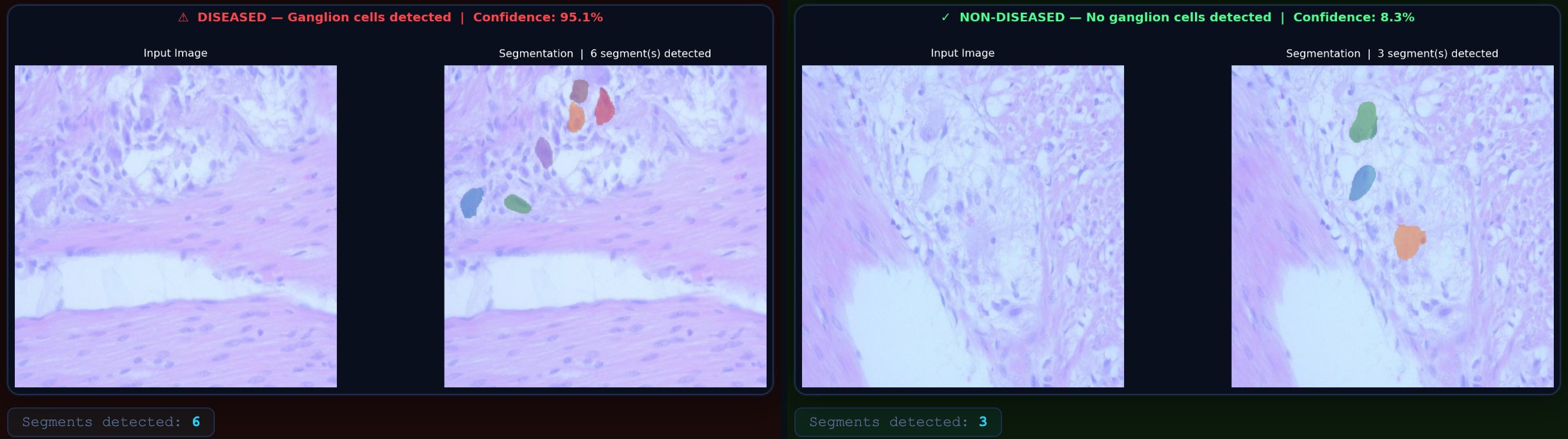
Hirschsprung Disease Detection via Segmentation‑Guided Histopathology Analysis
A Mask2Former-based segmentation model with a ResNet–Swin Transformer backbone, paired with a downstream classification framework for automated histopathology disease detection.
Screenshots above show real output — live Space may take ~30s to wake from idle.
View Source on GitHubMeta‑Learning for Zero‑Shot Cross‑Lingual Transfer (CML‑mDeBERTa)
A Curriculum Meta-Learning framework built on first-order MAML, trained on the XNLI dataset to enable zero-shot natural language inference across 15 languages.
Live Space may take ~30s to wake from idle.
View Source on GitHubSentence Classification using Convolutional Neural Networks (TextCNN)
A TextCNN model for sentence classification on the AGNews dataset, benchmarked across random, static, non-static, and multichannel word embedding strategies.
AI/ML Engineering Projects
Production-style infrastructure for running LLM systems safely and cheaply — not research, but the tooling that makes AI features reliable to ship.
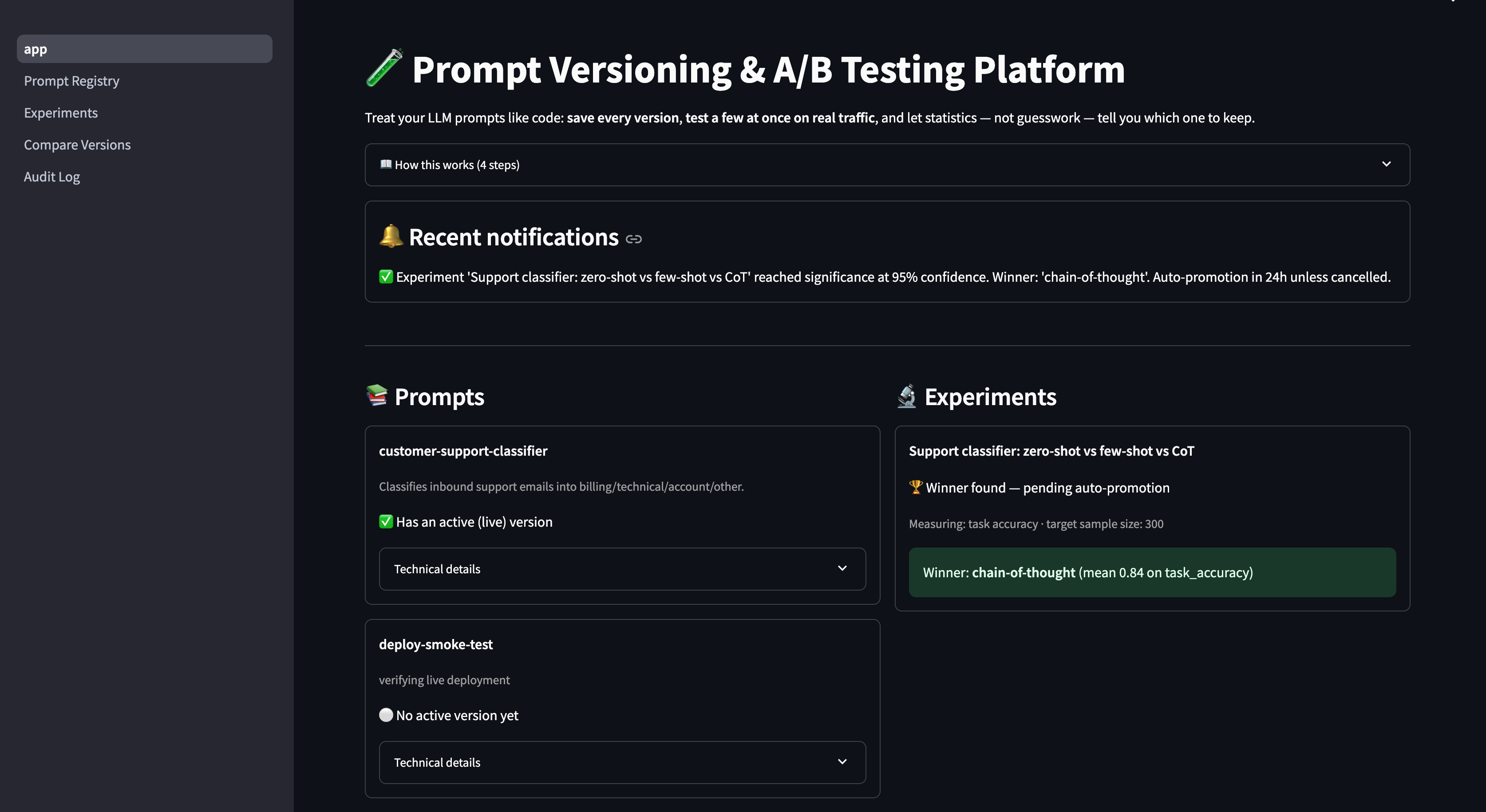
Prompt Versioning & A/B Testing Platform
Most teams tweak an LLM prompt, eyeball a few outputs, and ship — with no way to know if the change actually helped, quietly hurt accuracy for a slice of users, or tripled the token bill, until someone complains. This platform brings feature‑flag‑style rigor to prompt changes instead: every version is saved like a Git commit, traffic is split between variants with consistent hashing, and a real stats engine (Welch's t‑test + Mann‑Whitney U) declares a significant winner before it auto‑promotes to production.
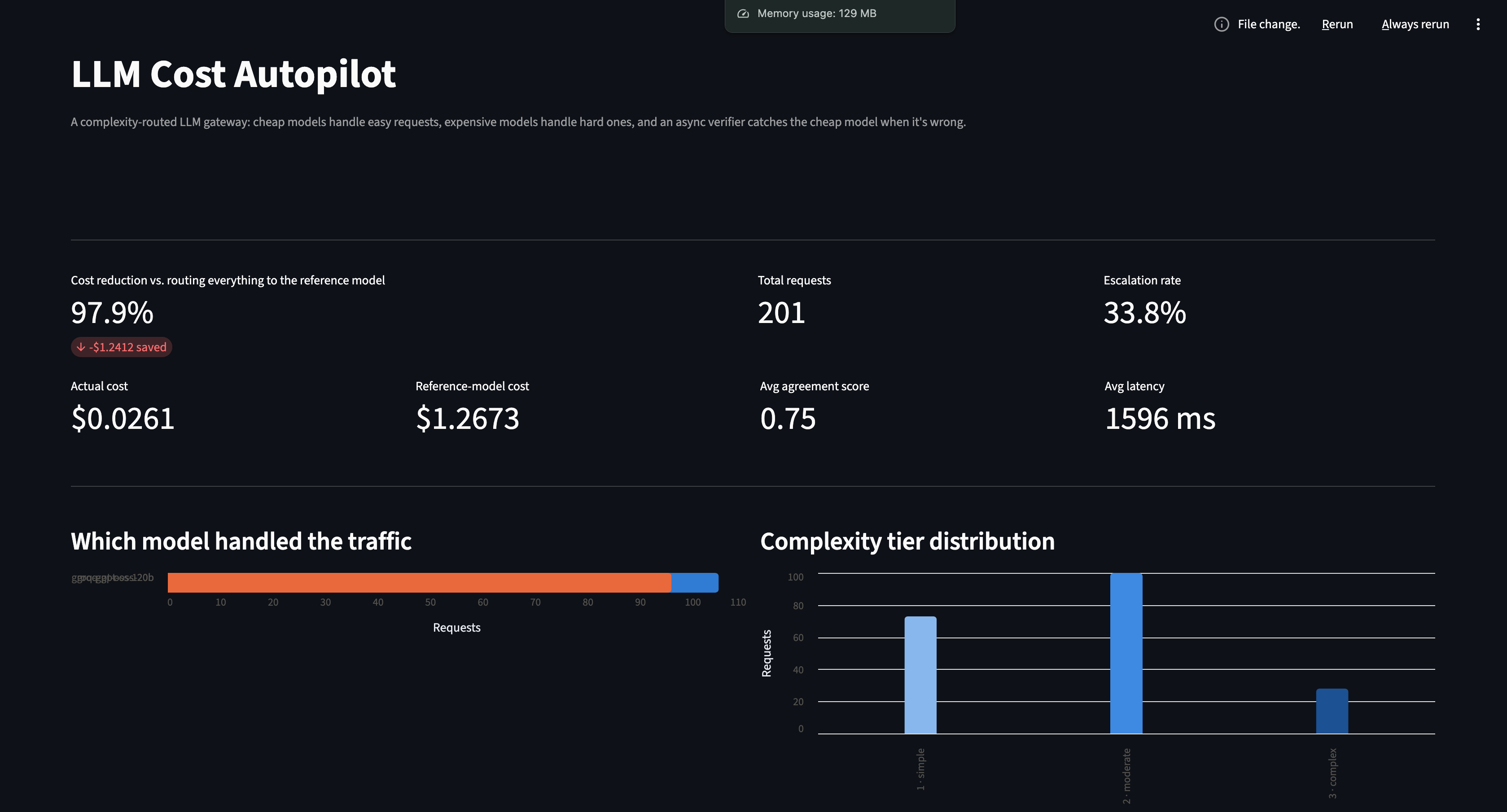
LLM Cost Autopilot — Complexity‑Routed LLM Gateway
Every request to a large model like GPT‑4 costs the same whether it's answering "what's 2+2" or a genuinely hard question — most production traffic doesn't need the expensive model, but routing prompts to cheaper ones by hand is risky with no safety net. This gateway solves that: it scores each prompt's complexity with an interpretable RandomForest classifier, sends it to the cheapest model that can handle it, and runs an async verifier that escalates to a stronger model whenever the cheap model's answer looks wrong.
LoRA Fine‑Tuning Pipeline for Automated Code‑Review Revisions
Base LLMs asked to apply a reviewer's comment don't just fix what was flagged — they reformat neighboring lines, add unrequested error handling, and wrap the diff in prose. This pipeline QLoRA‑fine‑tunes Mistral‑7B on 2,500 high‑signal examples curated from 150k+ raw PR diffs via a custom grounding‑score filter, guarded by three independent data‑leakage checks, so the model reproduces untouched code byte‑for‑byte and changes only what was asked. Evaluated with paired bootstrap confidence intervals and McNemar tests against a benchmark built so a copy‑the‑input baseline can't score well.
LLM API Gateway — Rate Limiting, Failover & Observability
Most teams call OpenAI or Anthropic directly from application code, then discover the hard way that they need rate limiting, budget guardrails, and a failover plan for when a provider degrades. This gateway is that infrastructure layer: a unified proxy across OpenAI, Anthropic, and Ollama with Redis‑backed atomic per‑team rate limiting, budget caps and per‑model access control enforced before a request reaches a provider, and automatic fallback routing verified end‑to‑end during a simulated provider outage. Circuit breakers run the full closed → open → half‑open → closed lifecycle, with every request, cost, and failover event traced via OpenTelemetry and surfaced across three Grafana dashboards.
Other Engineering Work
Full-stack, cloud, and DevOps projects delivered across internships, freelance, and client work.
CloudETL
ELT data pipelines with automated CI/CD workflows via Jenkins, containerized with Docker and orchestrated with Kubernetes on IBM Cloud. Built during the SPS DevOps & Cloud Infrastructure internship.
View on GitHubWebApp — Azure CI/CD
Web application deployed with CI/CD pipelines across Azure, IBM Cloud, and VMware, with Prometheus and Grafana monitoring. Built during the SPS DevOps & Cloud Infrastructure internship.
View on GitHubE-Commerce Platform
Full-stack store with Stripe payments, secure authentication, and order management.
View on GitHubMental Health Wellness App
AI-powered chatbot with mood tracking and personalized recommendations.
View on GitHubFinancial Budget Management Tool
Expense tracking, categorization, and analytics dashboards.
View on GitHubTravel Agency Admin Dashboard
Dynamic UI with REST APIs, user management, and reporting for an Australian travel agency.
Academic Background
Coursework: Machine Learning, Deep Learning, Computer Vision, NLP, Generative AI
Foundation in algorithms, systems, and software engineering.
Certifications & Trainings
Let's build something intelligent together.
Open to research collaboration, data science roles, and ML engineering opportunities focused on real-world impact.